Investment proposal

Discover the investment project

Leave your details and access the full regenerative capitalization proposal.

← Back to home

Collaborative investment in regenerative livestock

Virtual rancher, real economy, impact investment

Become a rancher without owning land: your capital turns into calves that gain weight every day on regenerative pastures, backing a family-run SME that creates local jobs. We produce, you capitalize.

8–25%ROI for the period*
6–7 monthsCycle length
40%of the spread is yours
Learn about the business

Why invest with us

A productive proposal, not a speculative one

We are a bridge between the real economy, environmental regeneration and value creation for our investors. We turn financial capital into a biological asset that grows independently of the monetary context, with immediate liquidity in the livestock market.

Real, tangible asset

Your capital translates into kilos of beef from the moment the contract is signed. The animals gain weight daily, turning grass into meat: active biological growth.

Zero operating costs

100% of costs (land, grass, labor, animal health) are borne by the farm. You provide the initial asset and receive 40% of the new kilos produced at zero cost.

Professional technical management

Veterinary and agronomic direction by El Mangrullo Ganadero: animal health, nutrition, grazing management and the technical decision on when to sell, with weight monitoring by scale.

An investment that isn't indifferent

A real-economy SME

Your capital doesn't sit on a screen: it turns into animals, grass and concrete production in Lincoln, Buenos Aires. A family business with decades of history on the land.

100% local job creator

Formal, registered employment, wages above the industry standard and constant team training. Investing here means sustaining decent work in the productive countryside.

In pursuit of regeneration

Every peso invested works on soil that is regenerating: more biodiversity, more captured carbon, more life. We don't produce at any cost.
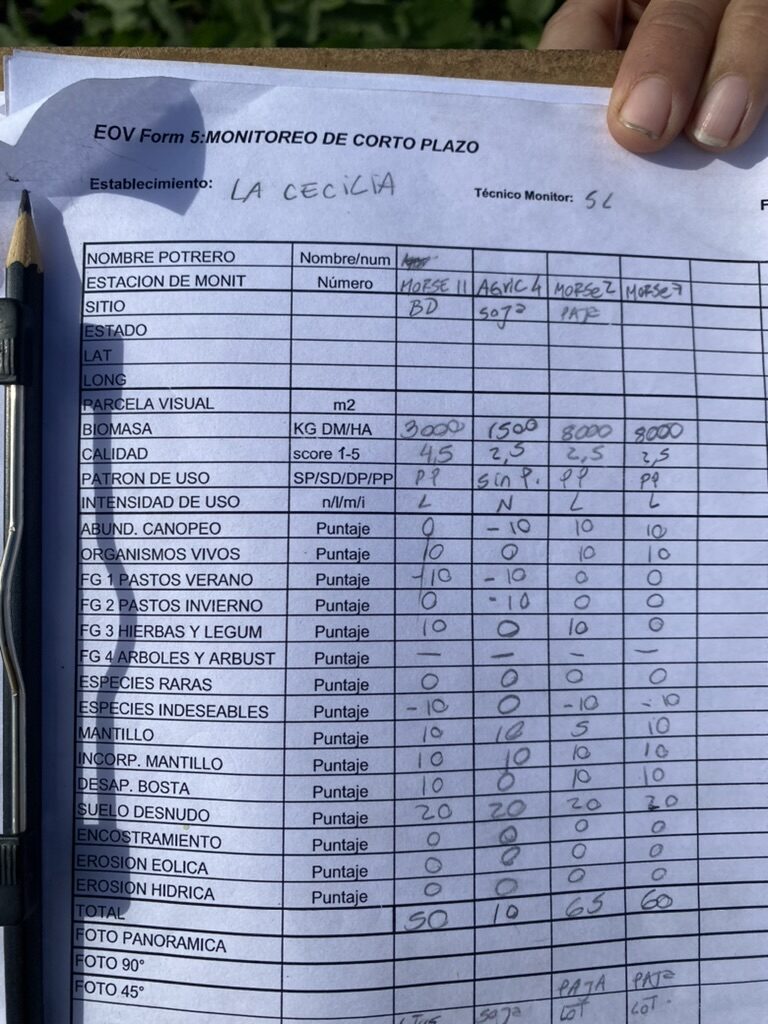
EOV monitoring sheet for the La Cecilia farm

Regeneration verified by Savory (EOV 2025)

Your investment is produced on farms with the Savory Institute's Ecological Outcome Verification: a biological asset that grows on land that is regenerating, measured and certified. Learn more →
The business

How does the business work?

In one sentence: you put in the money to buy calves, we background them on grass for 6–7 months, and when they're sold you recover your capital plus 40% of the gain.

1

Capital contribution

You contribute an amount in pesos to purchase the calves. No operating costs on your side.

2

Conversion into a real asset

At signing, your capital translates into kilos of beef based on the calves acquired.

3

Production

We provide land, infrastructure, multispecies pastures, animal health, labor and a scale with weight-gain monitoring.

4

60/40 split

Sale between November and January. The value spread is split: 40% for the investor, 60% for the farm. You recover your full capital plus your share.

The "inverse price": where the profit lies

In cattle farming, a calf is worth more per kilo than a steer. The key is that the profit doesn't come from buying cheap and selling dear, but from producing new kilos at zero cost to the investor. That injection of extra kilos dilutes the purchase price and drastically lowers the financial break-even point.

The numbers

Base parameters of the model

Example at reference values as of 06/01/26, per head. Amounts in Argentine pesos (ARS).

Initial asset1 calf of 190 kg bought at $6,500/kg
Capital invested per head$1,278,225 (includes 3.5% commercial expenses; the actual price is taken on the entry day)
Biological developmentPasture backgrounding of 6 to 7 months
Cycle production+110 kg per animal (final weight: 300 kg)
Spread split40% investor / 60% producer
Calculation baseNet exit value (300 kg × $/kg × 0.965) − entry value
What the investor collectsFull capital + 40% of the spread, in pesos
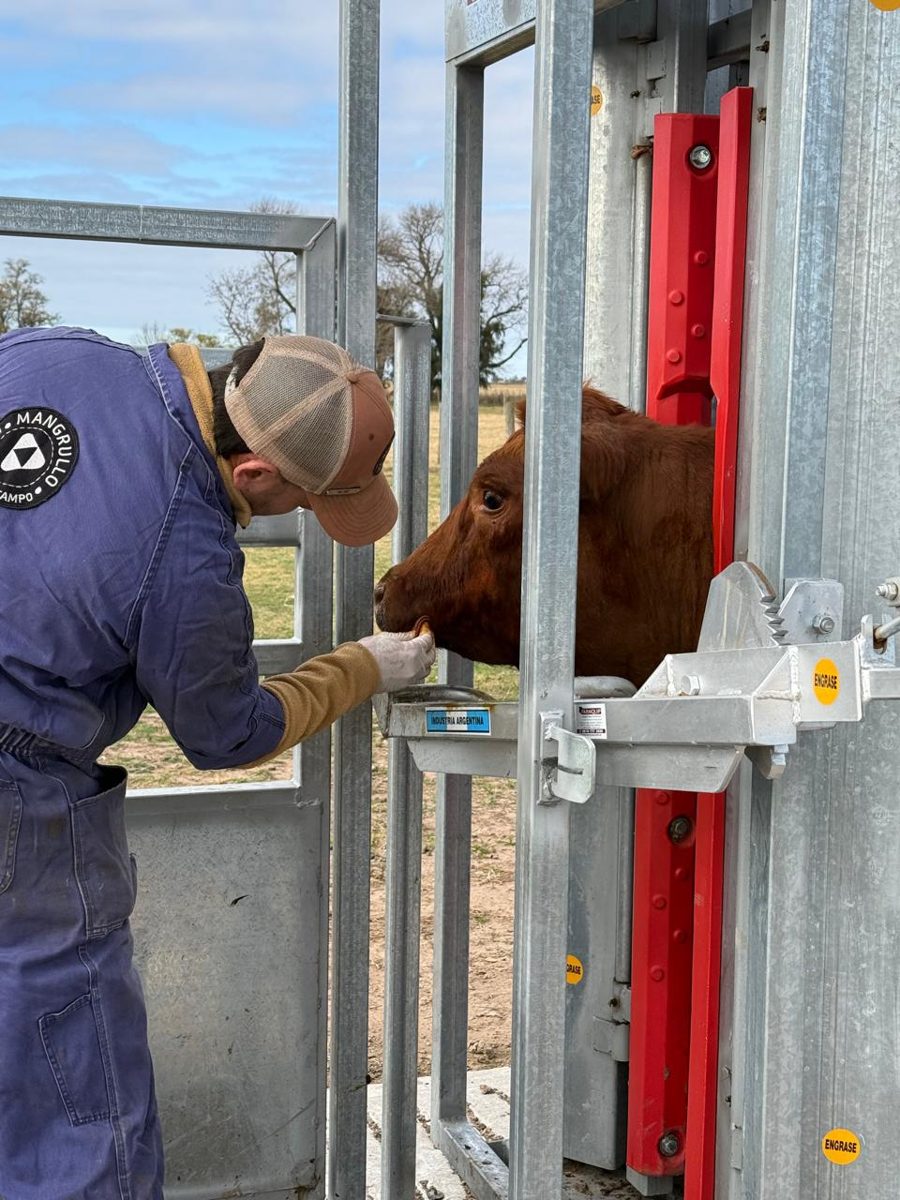
Veterinary team working at the chute

Two scenarios, a clear floor

Scenario A · Frozen market

The steer price doesn't rise a single peso

Steer projected at $5,300/kg (today's value). Spread per head of ; net investor gain of . Even if the economy freezes for 6–7 months, the kilo arbitrage leaves a clean profit.

Scenario B · Moderate inflation

The price follows inflation with a lag

Steer projected at $6,100/kg (~15% over the half-year). Spread per head of ; net investor gain of . The biological asset as a store of value with positive real returns.

The seasonal factor: the November–January window

The program's thesis is to sell at the peak of feedlot restocking demand, when backgrounding cattle tend to hold or improve their value. Investor's result (40%) by exit price:

Exit price ($/kg)Total received by the investorNet gain per headROI for the period

The farm controls the production of kilos; the market sets the value of those kilos. The split is on the economic result: both parties share the price tailwind or headwind. Reference prices: DeCampoaCampo (primary source) and CACG (cross-check).

Simulator

Simulate your investment

Choose how many calves you want to put to work and move across the exit-price scenarios. The calf value is editable: use today's market price. The calculation follows the model parameters: backgrounding to 300 kg and a 60/40 split. Amounts in Argentine pesos (ARS).

10 calves
$6,100/kg · moderate inflation scenario
Calves you buy
Capital applied
Lot exit weight
Valued sale (300 kg × $price − commercial expenses and freight)
Your net gain (valued sale − capital applied, × 40%)
Total you collect at close
ROI for the period (6–7 months)

The calf value and the exit price are market variables: update them to the day of your inquiry. The simulation does not constitute a guaranteed return; percentages, terms and conditions are agreed in each contract.

Transparency

Investing with clear rules

Climate / forage risk

Absorbed by the farm owner. If grass is scarce, we contractually guarantee the lot's feeding without passing extra costs to the investor.

Mortality

Up to 3% (technical historical average), the loss is shared in the same 60/40 proportion. Above 3%, the farm absorbs the loss.

Liquidity and early exit

You can request the return of your capital from the 4th month, with 30 days' notice (3% administrative fee or the direct costs of early sale).

Timing of the sale

The technical advisors decide when to sell based on the category/price relationship, seeking the best possible return for the lot.

Freight and marketing

A 3.5% adjustment on the entry and exit value (3% commission + 0.5% freight), distributed in the same 60/40 proportion of the split.

Formalization

A Loan (Mutuo) contract governing the rights and obligations of each party. Animals registered with SENASA through Grupo La Cecilia's RENSPA.

Individual traceability

The animals purchased are identified with electronic ear tags, allowing weight-gain tracking and the relevant data of each animal throughout the cycle.

Open doors

You can come visit the farm whenever you like: see your animals, the grass and the management with your own eyes.

Who's behind it

Farm and technical management

Grupo La Cecilia — Farm / Capitalizer

Regenerative mixed production · Lincoln, Buenos Aires.

Carina Margaria — General Director
Guillermo Mansilla — Operations Manager

El Mangrullo Ganadero — Technical management

Veterinary and agronomic direction · General Villegas, Buenos Aires.

José Villegas — Veterinarian (M.P. 14358-CVPBA)
Mariano Ottini — Agronomist
@ElMangrullo.Ganadero

*The returns shown come from scenarios projected at June 2026 reference values and do not constitute a guaranteed return. Percentages, terms and conditions are agreed in each contract.

Frequently asked questions

What every investor wants to know

What happens if an animal dies?

Up to 3% mortality (the technical average), the loss is shared in the same 60/40 proportion of the contract. Any loss above that threshold is absorbed by the farm, not the investor.

And if there's not enough grass due to drought?

The climate and forage risk is absorbed by the farm owner. If grass is scarce, we contractually guarantee the lot's feeding without passing extra costs to you.

When and how do I get paid?

At the end of the cycle (6–7 months) the lot is sold and settled in pesos: you recover your full capital plus 40% of the value spread generated.

Can I exit early?

Yes. You can request the return of your capital from the 4th month, with 30 days' notice. A 3% administrative fee applies on the total settled (or the direct costs of early sale of the lot).

How is the price of the animals set?

Market prices by category are used: DeCampoaCampo as the primary source and the Argentine Chamber of Livestock Consignees (CACG) as a cross-check, on the entry and exit day.

Who owns the animals?

Grupo La Cecilia registers the cattle with SENASA through its RENSPA throughout the cycle. The operation is instrumented through a Loan (Mutuo) contract governing each party's rights and obligations.

Contact

Join us and invest with impact

We'll send you the detailed investment prospectus and arrange a farm visit.

info@grupolacecilia.com

+54 9 11 6154 9199

Message us on WhatsApp